Latest Updates

Successful Aging

    • By 2050, the older population is projected to double from 40.3 million in 2010 to 83.7 million in 2050. Because age-related diseases are now the leading causes of death in developed countries, some have begun to view aging as a major public health issue.
    • There are now multiple theories regarding the processes underlying biological aging. For example, the inflammatory theory of aging, or “inflammaging,” posits that the proinflammatory response required to repair cellular damage inflicted by infectious diseases becomes detrimental in later life, contributing to age-related diseases such as obesity, diabetes, and cardiovascular disease. Another theory of aging is that attrition of telomeres, the protective end complexes at the termini of eukaryotic chromosomes, leads to maladaptive cellular changes that in turn promote the development of a number of age-related diseases.
    • In theory, the complex mixture of genes influencing successful aging could include those involving emotion regulation and stress tolerance. For example, the alpha-2B-adrenergic receptor gene (ADRA2B) encodes a subtype of the adrenergic receptor family that plays a critical role in regulating neurotransmitter release from adrenergic neurons in the central nervous system. 

Contraception

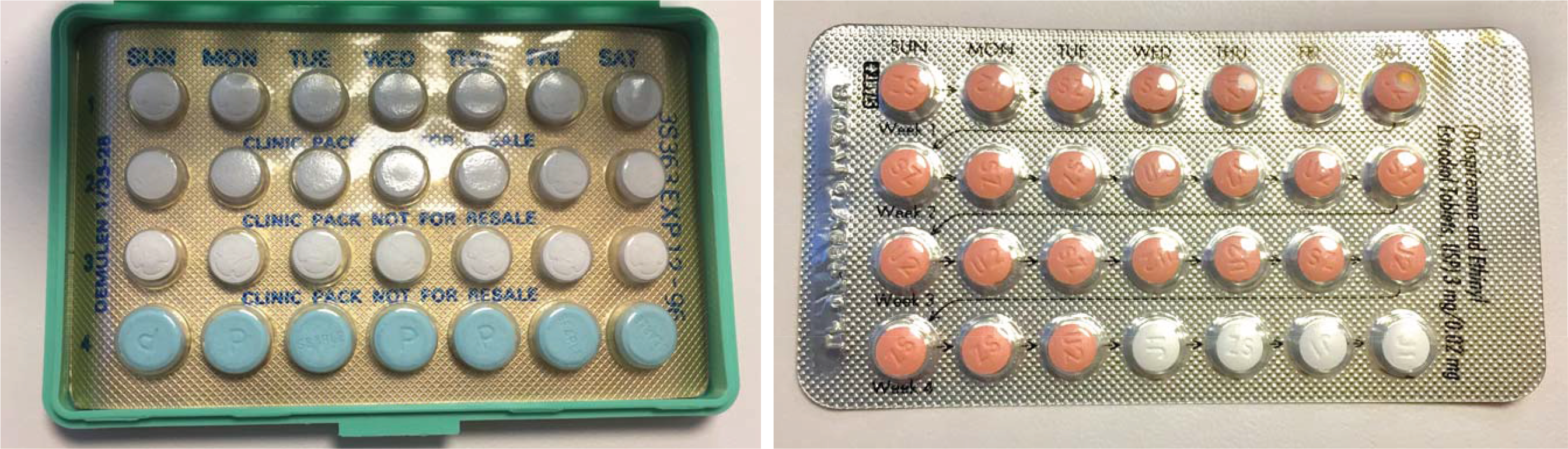
    • Clinicians may often be able to initiate all types of contraception safely during a patient’s initial office visit, even outside the first week of menses.
    • The CDC issues guidelines to assist with choosing a suitable contraceptive method in the setting of coexisting medical problems.
    • Long-acting reversible contraception such as intrauterine devices and the subdermal contraceptive implant are highly effective and require little action on the user’s part. Clinicians should offer them as first-line options whenever possible.

Contraception

    • Clinicians may often be able to initiate all types of contraception safely during a patient’s initial office visit, even outside the first week of menses.
    • The CDC issues guidelines to assist with choosing a suitable contraceptive method in the setting of coexisting medical problems.
    • Long-acting reversible contraception such as intrauterine devices and the subdermal contraceptive implant are highly effective and require little action on the user’s part. Clinicians should offer them as first-line options whenever possible.

Clinical Trial Design and Statistics

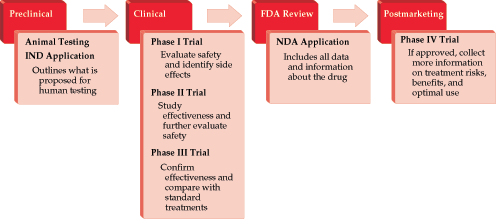
    • Because of the complex nature of clinical trial design, significant resources and infrastructure are invested in drug development. Many drugs fail to progress beyond the phase I/II stage, and many phase III trials take years to accrue and publish results, leading to a delay in Food and Drug Administration (FDA) approval for diseases that desperately need better therapeutic options. The relatively recent FDA Safety and Innovation Act has allowed for the creation of priority and expedited review for drugs and biologics in serious conditions and where there is an unmet medical need. The designation of fast-track or breakthrough therapy may be granted when there is preclinical or clinical evidence to suggest that the intervention may result in a substantial improvement over currently available therapies. 
    • Prior to embarking on a clinical trial, data entry, editing (“cleaning”), and analysis should be anticipated. Planning for data management begins with developing rules for coding the variables for computer entry. The appropriate hardware and software programs should be selected and standardized across study sites.
    • A type I error (false positive) occurs if an investigator rejects a null hypothesis that is true in the population. A type II error (false negative) occurs if the investigator fails to reject a null hypothesis that is false in the population. Neither of these errors can be avoided entirely.

Clinical Trial Design and Statistics

    • Because of the complex nature of clinical trial design, significant resources and infrastructure are invested in drug development. Many drugs fail to progress beyond the phase I/II stage, and many phase III trials take years to accrue and publish results, leading to a delay in Food and Drug Administration (FDA) approval for diseases that desperately need better therapeutic options. The relatively recent FDA Safety and Innovation Act has allowed for the creation of priority and expedited review for drugs and biologics in serious conditions and where there is an unmet medical need. The designation of fast-track or breakthrough therapy may be granted when there is preclinical or clinical evidence to suggest that the intervention may result in a substantial improvement over currently available therapies. 
    • Prior to embarking on a clinical trial, data entry, editing (“cleaning”), and analysis should be anticipated. Planning for data management begins with developing rules for coding the variables for computer entry. The appropriate hardware and software programs should be selected and standardized across study sites.
    • A type I error (false positive) occurs if an investigator rejects a null hypothesis that is true in the population. A type II error (false negative) occurs if the investigator fails to reject a null hypothesis that is false in the population. Neither of these errors can be avoided entirely.

Assessment of Hemostasis

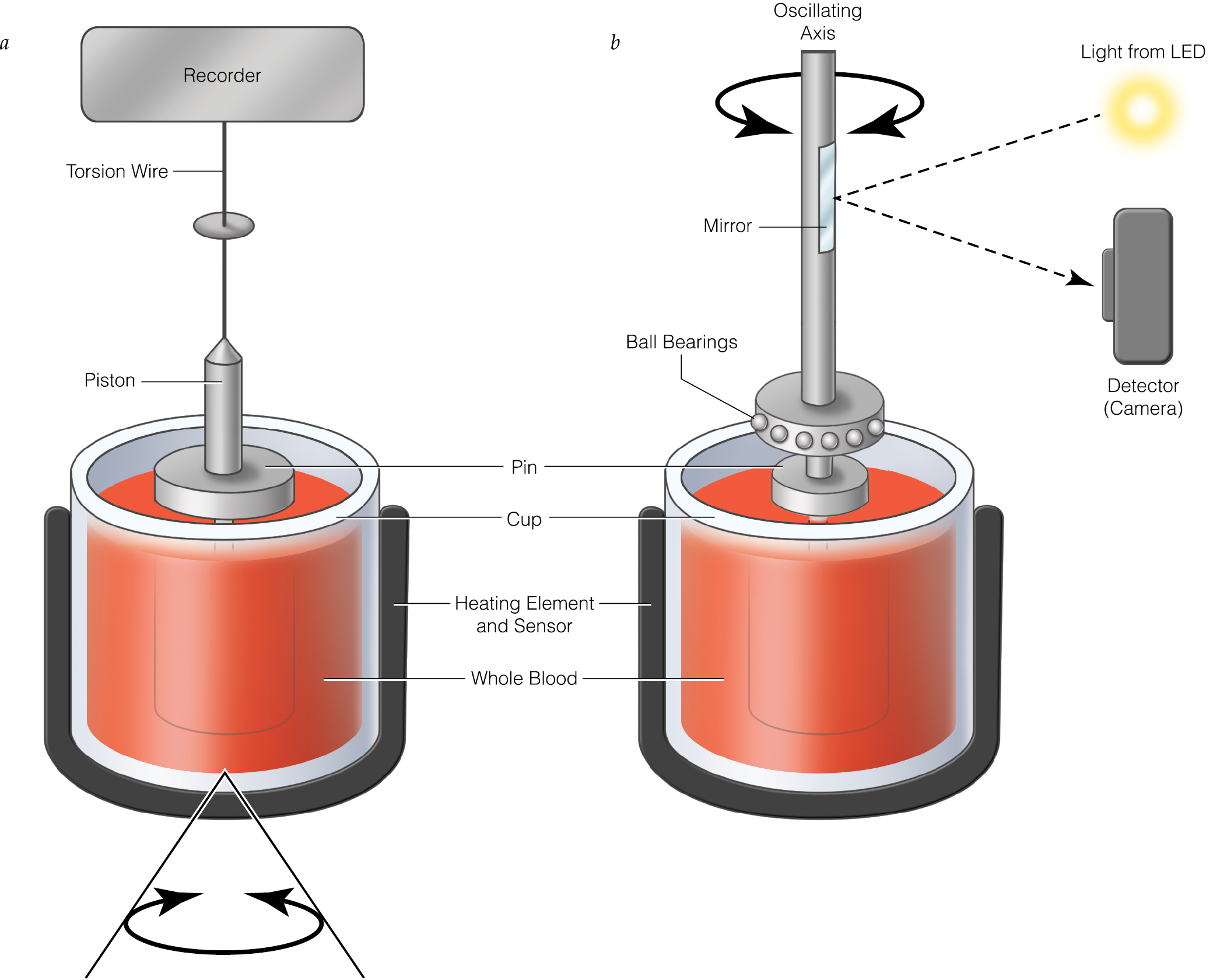
    • Thromboelastography/rotational thromboelastometry: viscoelastic testing has recently been shown to be an effective means of measuring hemostasis and guiding resuscitation in trauma, traumatic brain injury, and liver transplant patients
    • 1:1:1 resuscitation: The early administration of blood products in trauma patients can help correct or prevent early coagulopathy following trauma, resulting in fewer early deaths from exsanguination
    • Idarucizumab: Idarucizumab quickly and effectively reverses the effects of dabigatran in patients taking this novel anticoagulant who urgently need surgery

Assessment of Hemostasis

    • Thromboelastography/rotational thromboelastometry: viscoelastic testing has recently been shown to be an effective means of measuring hemostasis and guiding resuscitation in trauma, traumatic brain injury, and liver transplant patients
    • 1:1:1 resuscitation: The early administration of blood products in trauma patients can help correct or prevent early coagulopathy following trauma, resulting in fewer early deaths from exsanguination
    • Idarucizumab: Idarucizumab quickly and effectively reverses the effects of dabigatran in patients taking this novel anticoagulant who urgently need surgery

Clinical Trial Design and Statistics

    • Because of the complex nature of clinical trial design, significant resources and infrastructure are invested in drug development. Many drugs fail to progress beyond the phase I/II stage, and many phase III trials take years to accrue and publish results, leading to a delay in Food and Drug Administration (FDA) approval for diseases that desperately need better therapeutic options. The relatively recent FDA Safety and Innovation Act has allowed for the creation of priority and expedited review for drugs and biologics in serious conditions and where there is an unmet medical need. The designation of fast-track or breakthrough therapy may be granted when there is preclinical or clinical evidence to suggest that the intervention may result in a substantial improvement over currently available therapies. 
    • Prior to embarking on a clinical trial, data entry, editing (“cleaning”), and analysis should be anticipated. Planning for data management begins with developing rules for coding the variables for computer entry. The appropriate hardware and software programs should be selected and standardized across study sites.
    • A type I error (false positive) occurs if an investigator rejects a null hypothesis that is true in the population. A type II error (false negative) occurs if the investigator fails to reject a null hypothesis that is false in the population. Neither of these errors can be avoided entirely.
« Previous | Next »
Updates per yearSpecialty updatesNumber of sections